Mr Mayer, when we talk about artificial intelligence, most people think of chips and software. What does that have to do with sheet metal?
Stephan Mayer: "Data centres are largely made of sheet metal. There are the server racks that house the computers. Next, the ventilation and cooling systems, and finally the power supply, including electrical cabinets, substations, and other systems. For TRUMPF, as a machine tool manufacturer, this is a huge growth market because sheet metal fabricators use our machines to produce a wide variety of parts for data centres – and demand is currently high."
Mr Ley, ZIEHL-ABEGG manufactures fans. What role do data centres currently play in your company?
Joachim Ley: "A very large one. Our core business is ventilation, air conditioning, and cooling for buildings. In recent years, the demand for data centre cooling has grown significantly. Both business areas now account for around one third of our turnover each. I expect data centres to become our largest market segment within the next two years. We are the market leader in this sector in several regions of the world. This is also reflected in our growth figures. Last year, we grew by 12%, and this year we expect growth of around 20%."
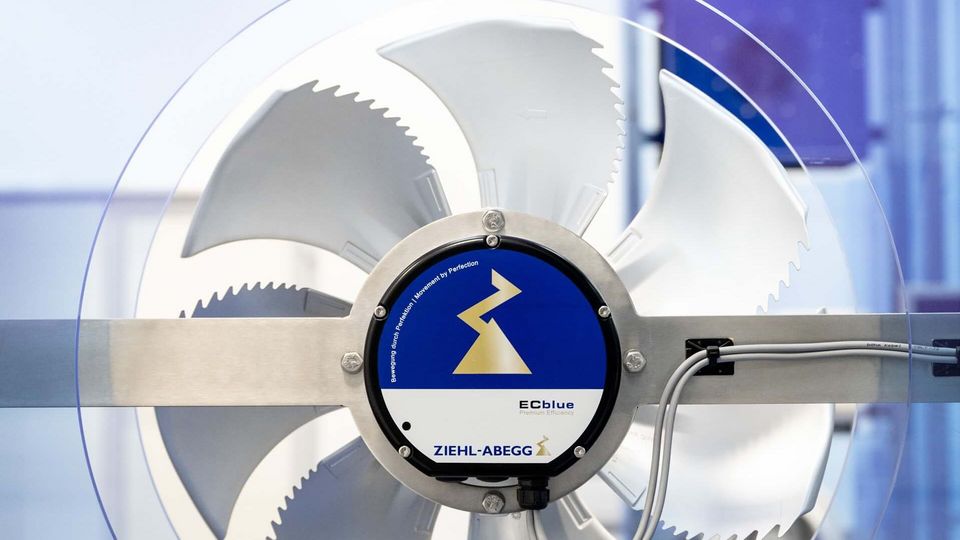
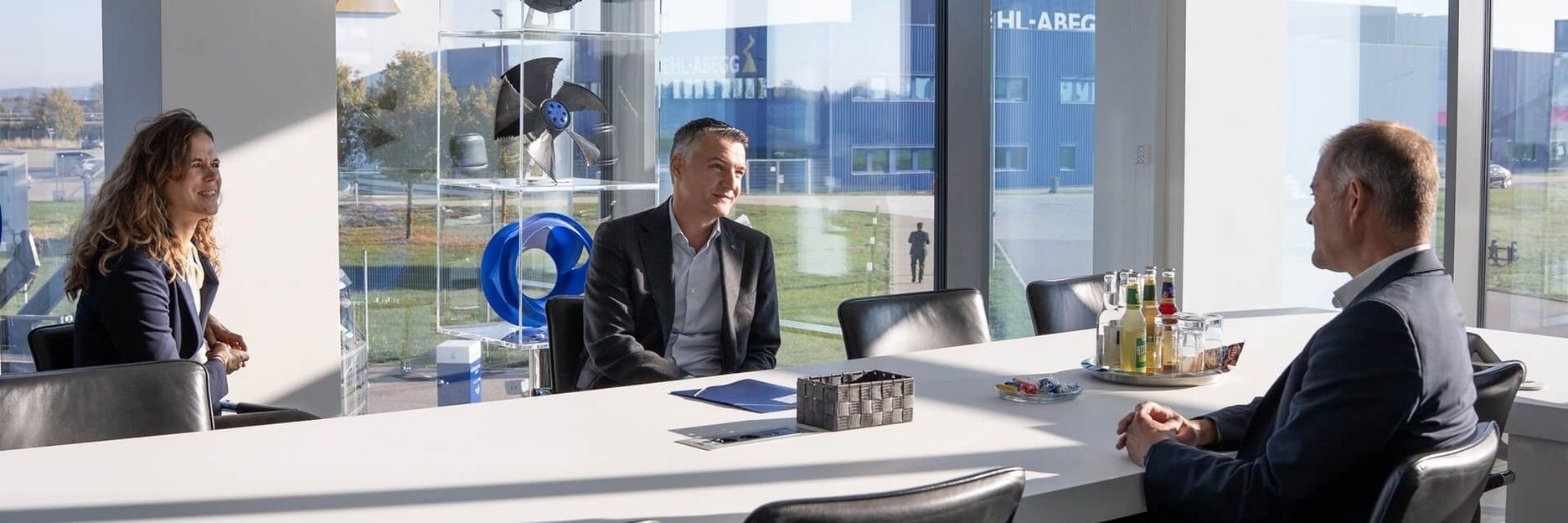
ZIEHL-ABEGG fans play a major role in data centre cooling.
What does this growth mean for your production?
Ley: "We need to significantly expand our capacity. To achieve this, we have approved an additional investment package of €90 million for the next 24 months. However, it's not just a matter of installing more machines. Above all, we want to increase production through automation and greater efficiency. TRUMPF’s end-to-end solutions play an important role in this – from software and automated storage systems to the machine themselves."
Specifically, what parts do you manufacture using TRUMPF technology?
Ley: "At our German plants, we manufacture most of our sheet metal components ourselves. These include, for example, support plates on which the fans are installed, and inlet nozzles, which are important for airflow. For us, reliability, flexibility, and good service are key. After all, our customers expect us to be able to deliver reliably even when demand rises sharply."
Mr Mayer, what machines are required for components of this kind?
Mayer: "In data centres, we often deal with large, flat components made of relatively thin sheet metal. Punching and punch laser machines are particularly well suited to this purpose. Not only can you cut sheet metal, but you can also, for example, form ventilation slots or cut threads. This eliminates the need for subsequent work steps. In addition, there are panel bending machines that bend large sheets of metal automatically and with high precision. Today, we can interlink these processes. From raw sheet metal to the finished bent component, the manufacturing process is then largely automated."
Automation is particularly worthwhile for large production runs. However, ZIEHL-ABEGG serves a wide variety of customers. How does that all add up?
Ley: "That is precisely where one of the great strengths of TRUMPF's solutions lies. A data centre customer may need 2,000 identical fans. A heating and ventilation contractor, on the other hand, might order only three or five units. We need to be able to produce both orders as cost-effectively as possible. To achieve this, we need systems that can be adapted to different components without requiring extensive setup work. "During a visit to the TRUMPF Smart Factory in Chicago a few years ago, I was particularly impressed by how seamlessly the software works with the machines – from production planning and program creation to store management and optimal material utilization."
Mayer: "In the past, automation was primarily used in areas where the same parts were manufactured year after year, such as in the automotive industry. By contrast, if you switch between different components several times daily, automation becomes very challenging. That's exactly what we're working on intensively. We invest approximately €40 million annually in software development. Our goal is to be able to manufacture new components with as little programming and work as possible. This makes even small quantities economically viable."
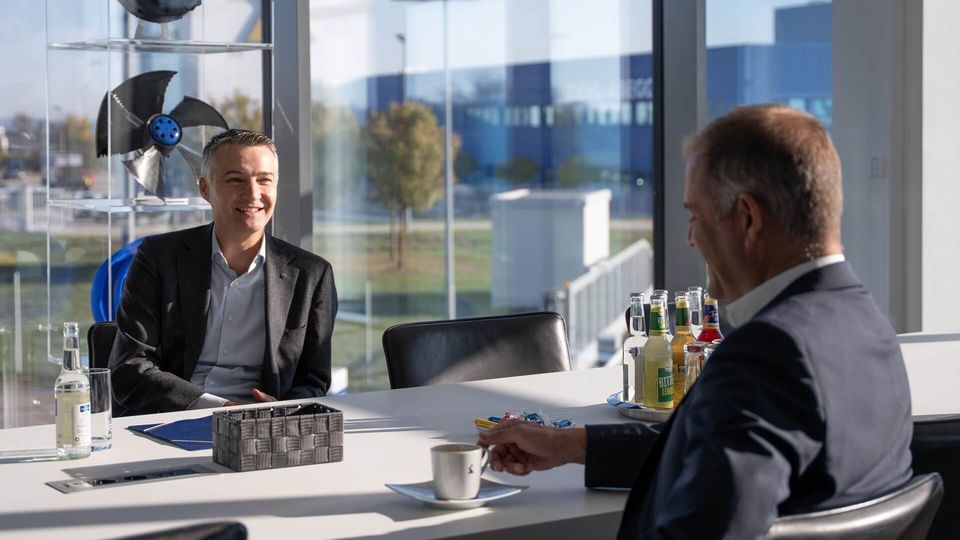
Stephan Mayer: "Sheet metal fabricators use our machines to manufacture parts for data centres. And demand is high right now."
Mr. Ley, demand for data centres is currently growing rapidly. Isn't there a risk that an AI bubble will form and the industry will be left with excess capacity?
Ley: "This issue is of great concern to us. Every extraordinary growth cycle will eventually come to an end, often resulting in excess capacity. The decisive question is when that will happen. Optimists expect growth to slow, but to continue for a long time to come. More cautious estimates put the timeframe at two to four years. We ourselves expect the boom to last at least another three years. Otherwise, our investment calculations wouldn't add up. This is further supported by the fact that many of the announced investments are actually being implemented. Nevertheless, we make sure to maintain a broad base and avoid becoming dependent on a single market."
Mayer: "I'm also optimistic. Building data centres requires enormous investment in infrastructure and energy supply. Of course, political decisions or other unexpected developments can affect the market. But when it comes to AI, we're still in the early stages in many areas – such as image processing and robotics. That's why I expect this trend to continue for a long time to come."
What must Germany do to ensure that as much of this value creation as possible takes place here?
Ley: "We shouldn’t underestimate our strengths. Germany continues to have outstanding research institutions, universities, and innovative companies. Of course, we must address challenges such as high labour costs, bureaucracy, and the shortage of skilled workers. But we should focus more on the opportunities and work together to take advantage of them."
Mayer: "Above all, we must continue to invest in innovation, automation, and efficiency. We are not competitive with China when it comes to labour costs. This makes it all the more important to ensure that the gap does not become too wide. Just carrying on as usual isn't enough anymore. That is why we need to be technologically superior and increase our productivity. At ZIEHL-ABEGG, we see how this can be achieved – by investing in modern manufacturing, industrial value creation remains competitive in Germany as well."
The interview was conducted by Ramona Hönl.